
Voice
Keep a record of what happens without stopping to write it down.
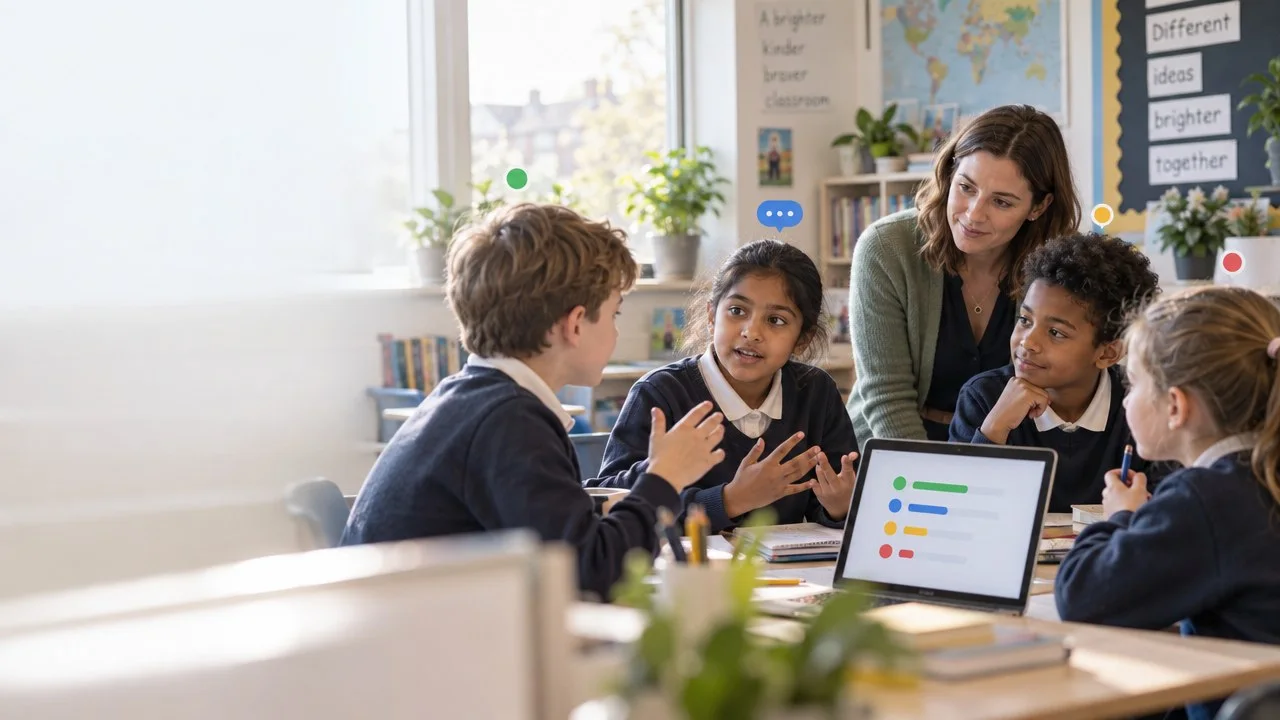
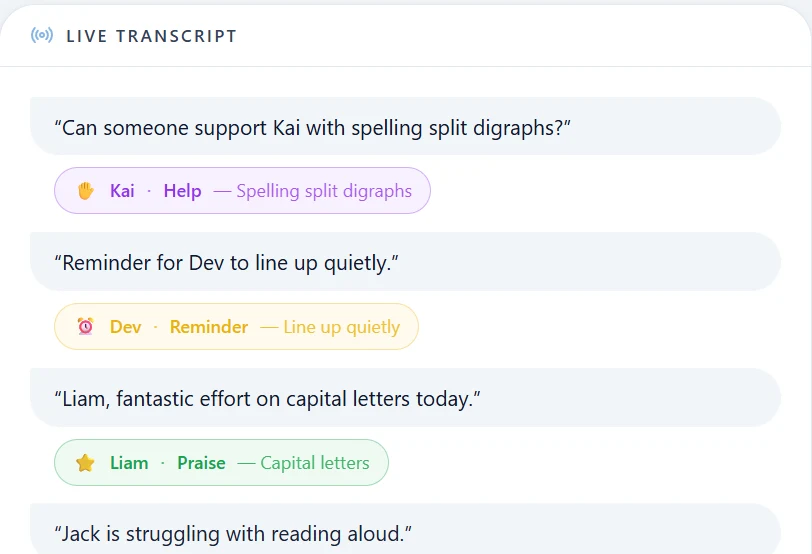
A teacher speaks naturally while teaching and each observation is logged against a child. A tradesperson walks a job, says what needs doing, and it becomes an itemised quote.
Combinational AI
This is combinational AI. Voice recorded in the room, video from a phone, your organisation’s own knowledge and the data you already hold. askKira brings them together, works out what they mean, and shows the person responsible what to do next, with the evidence and how sure it is.

Definition
Combinational AI is AI that brings several sources of information together, such as voice, video, an organisation’s own knowledge and its data, and analyses them as one, so that a person can make an informed decision in the moment. askKira builds combinational AI on one secure platform, hosted in the UK, where the numbers are calculated first, then explained, and every recommendation shows its evidence and how sure it is.
1The askKira Platform
2Your information goes in
3The AI analyses it
Answers from the four AI models can be compared, so the best one is taken, not the first.
5Pulse shows what happened
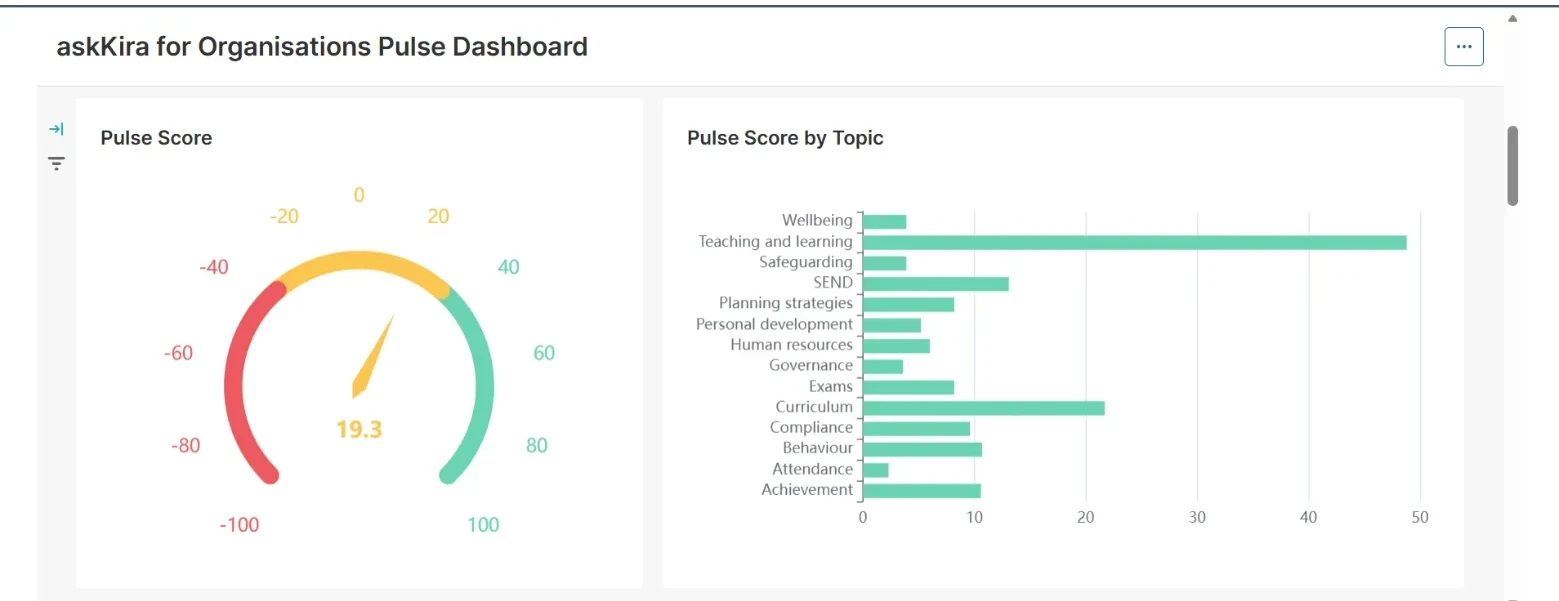
Shows leaders how AI is being used, on what, and how people feel.
What leaders learn from Pulse goes back into your organisation’s knowledge, policies and practice, so every cycle starts better informed.
Your data still never trains an AI model.4An informed decision, in the moment

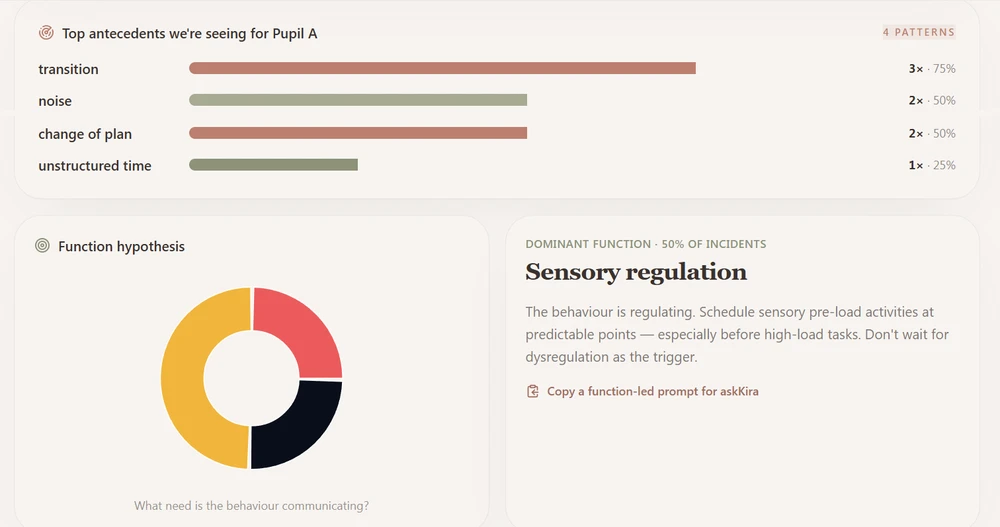
Example: Talkology shows that most of Pupil A’s incidents follow a transition, suggests the need behind them and what to try first. The adult decides what to do.
Step 1
Voice
A teacher speaks naturally while teaching and each observation is logged against a child. A tradesperson walks a job, says what needs doing, and it becomes an itemised quote.

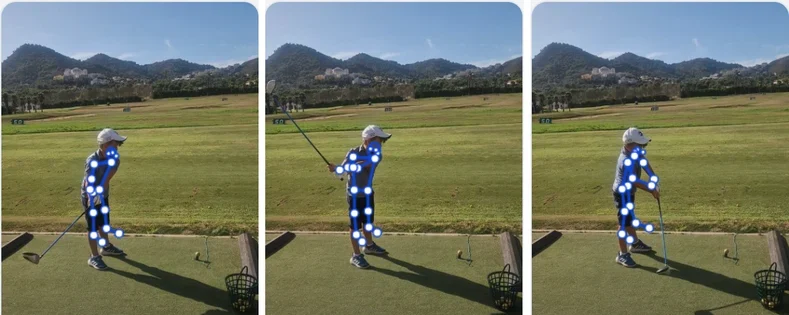
Video
The body is read frame by frame on the phone that filmed it. Positions and timings come from the movement itself, and the clip is never uploaded.

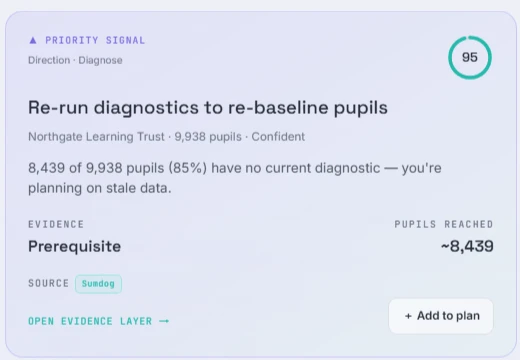
Your organisation's knowledge
Tell askKira about your organisation, the values you work by and the knowledge your team relies on, and every answer starts from how you work.

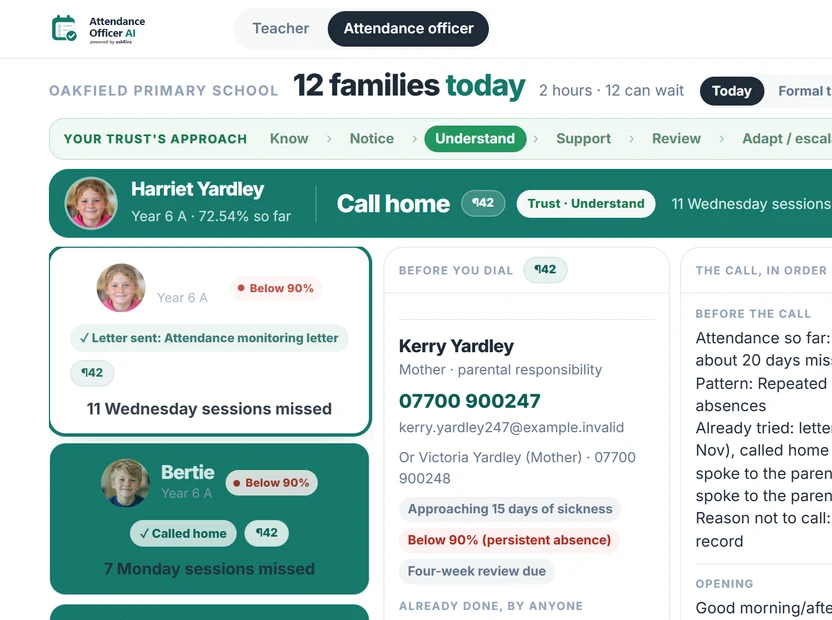
Your data
Attendance, assessment, practice and survey data, read for you. The pupils who need support are flagged, with the reason and how sure it is.
Step 2
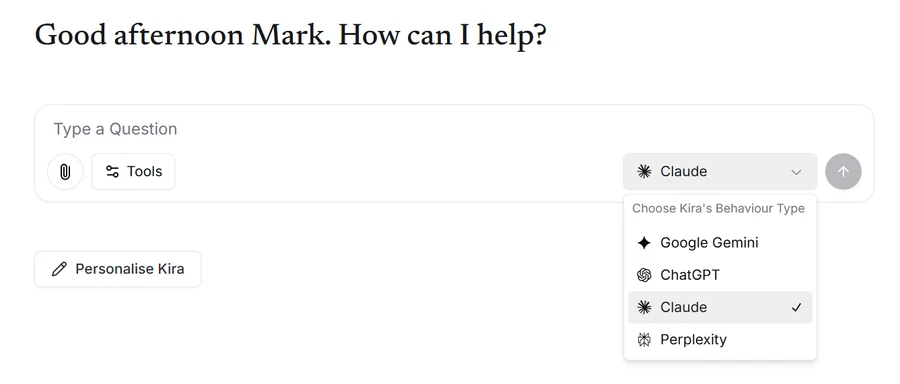
Claude, ChatGPT, Gemini and Perplexity in one secure workspace, so answers can be compared and the best one taken rather than the first one.
Pulse shows leaders what staff ask AI about, how often they use it and how they are feeling, by school, role and topic.
Combinational AI in practice

Our first combinational AI product was Bounce AI, in 2025. It combines Bounce Together’s wellbeing survey data with Bounce Forward’s resilience expertise, so a school sees which resources to focus on, based on its own findings.
Since then, founders and partners have brought their own expertise, and each product combines different sources.
Step 3
The numbers are calculated first, then explained. Each suggestion says how sure it is and how many records it rests on, and none of them acts on its own.
What comes next
Today each product combines a few sources for one job. Next, several products working together in one place, so the people responsible for it see more of what is happening, with the evidence, and make informed decisions as things happen.

Questions people ask
Combinational AI is AI that brings several sources of information together, such as voice, video, an organisation’s own knowledge and its data, and analyses them as one, so that a person can make an informed decision in the moment.
One AI tool answers from what you type into one conversation. Combinational AI joins several sources of information and several AI models, calculates the numbers first, then explains them with the evidence and how sure it is.
No. Multimodal AI is one model that can read text, images or audio. Combinational AI combines different sources of information, different products and different AI models around a decision a person has to make.
Bounce AI combines Bounce Together’s wellbeing survey data with Bounce Forward’s resilience expertise. Classroom Companion combines a teacher’s voice with the class record. Pupil Progress AI combines a trust’s assessment and practice data.
Yes. It runs on the askKira Platform, hosted in the UK on AWS London, and customer data is never used to train an AI model.
A person. Every recommendation shows its evidence and how sure it is, and none of them acts on its own.
Claude, ChatGPT, Gemini and Perplexity, in one secure workspace, with Pulse analytics showing how AI is being used.
Yes. Five of askKira’s twelve products started with a partner’s expertise. Tell us which decisions you want to make better, and we will show you which sources can be combined.
Tell us which decisions you want to make better, and we will show you which sources can be combined.